By: Amanda Davenport, Business Operations Manager
Over the past few months, I have found myself in two parallel learning tracks. One is deeply human. The other is highly technical.
Since January, I completed my AI Business Integrator certification through ChiefAIOfficer.com—learning how AI can be embedded into businesses to drive efficiency, clarity, and scale. At the same time, I had the opportunity to go through a train-the-trainer on Working Genius recently finished reading the book.
I did not expect these two paths to intersect. But they do—and in a way that fundamentally changes how I think about work.
The Real Problem Isn’t Effort. It’s Flow.
Most leadership teams are not struggling because people are not working hard enough. They are struggling because work is not flowing. Ideas get stuck. Decisions stall. Execution breaks down. And when that happens, organizations default to what I would call “heroics.”
The same few people step in to push things forward. Leaders become the bottleneck. Teams stay busy, but progress is inconsistent.
This is where I see many organizations today—especially as they begin exploring AI. They are trying to layer new technology onto systems that already lack clarity. And instead of solving the problem, it often amplifies it.
What Working Genius Reveals
Working Genius provides a simple but powerful lens: work moves through three stages.
- Ideation – Wonder and Invention.
- Activation – Discernment and Galvanizing.
- Implementation – Enablement and Tenacity.
What makes this so valuable is not just the framework—it is the clarity it creates. It helps leaders understand where work naturally gets stuck, who is energized by which parts of the process, and why certain teams consistently struggle to follow through. In many organizations, the breakdown is predictable. Strong ideation, weak execution. Great starters, limited finishers. Decision-making bottlenecks that slow everything down.
Working Genius gives leaders language for this. It answers the question: Where is work breaking down across our people?
What AI Actually Does Well
AI, when used correctly, is not a replacement for people. It is a force multiplier for how work gets done. It excels at capturing and organizing ideas, structuring information and decisions, creating consistency in communication, automating repeatable tasks, and tracking progress and accountability. In other words, AI improves how work flows through a system.
But there is an important distinction. AI does not decide what work matters, who should own it, or where energy and capability exist on a team. That is still a leadership responsibility.
Where They Come Together
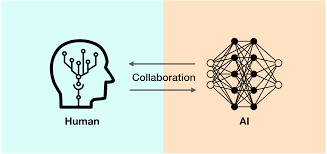
This is where the connection becomes clear. Working Genius explains how work should flow through people. AI accelerates how work flows through the system. When used together, the impact becomes powerful. In Ideation, AI can capture, expand, and organize thinking so ideas do not get lost. In Activation, AI can help structure decisions, evaluate options, and communicate direction clearly. In Implementation, AI can support execution through automation, tracking, and consistency.
Working Genius ensures the right people are engaged in the right type of work. AI ensures that work moves faster, cleaner, and more consistently.
The Risk Most Leaders Are Missing
There is a growing push to “implement AI” across organizations. But here is the concern. If you introduce AI into a system where roles are unclear, work ownership is inconsistent, and teams are already misaligned, you will not create clarity. You will accelerate confusion. You will move faster—but not necessarily in the right direction. And in many cases, you will increase frustration and burnout because people are now expected to move faster inside a system that still does not work.
A Different Way to Think About It
The leaders who will benefit most from AI are not the ones who adopt tools the fastest. They are the ones who design their work the best. They understand how work flows across their team. They align responsibilities to people’s natural strengths. They create clarity around ownership and expectations. Then they apply AI to remove friction and increase speed.
This is not technology-first. It is design-first.
The Opportunity Ahead
We are moving into a time where leadership will require both a deep understanding of people and a practical understanding of systems and technology. Working Genius helps us better understand the human side of work. AI gives us leverage on the execution side. When those two come together, something changes.
Work becomes more aligned. Execution becomes more predictable. Leaders spend less time firefighting and more time leading.
Questions Worth Considering
As you think about your own organization:
- Where does work consistently get stuck?
- Are your people doing the type of work they are naturally wired for?
- And if you introduced AI today, would it clarify your system, or expose it?
Because AI will not fix a broken flow of work. But paired with the right design, it can transform it.